
From NOAA’s National Severe Storms Laboratory and the Texas Department of Insurance: getting your claim paid (updated April 16, 2025) and contractors and deductibles (updated December 9, 2025).
A hail damage roof inspection is a slope-by-slope look at the shingles, ridge, flashing, vents and gutters after a storm, to find the strikes you cannot see from the yard and tell them apart from normal wear. It is worth booking after any storm that dropped quarter-size hail or bigger near your house, even when nothing is leaking yet.
This guide covers what hail does to a roof, what an inspector looks for, what you can check from the ground, and how the Texas claim process fits around it. Our hail and storm damage page explains how we handle storm work, and our inspection is free.
What’s in this guide
- When to get a hail inspection
- What hail damage looks like (and what it isn’t)
- What you can check from the ground
- What the inspection covers
- Does hail damage leak?
- The inspection and a Texas insurance claim
- If the roof needs replacing
- Hail inspection questions
When to Get a Hail Inspection
NOAA’s National Severe Storms Laboratory considers hail quarter size (1 inch) or larger severe. Smaller stones can still mark an older roof, but once the hail on your lawn or car hood is quarter size or bigger, the roof is worth a look.
| Hail looks like | Diameter |
|---|---|
| Pea | ¼ inch |
| Penny | ¾ inch |
| Quarter (severe from here up) | 1 inch |
| Ping-pong ball | 1½ inches |
| Golf ball | 1¾ inches |
| Tennis ball | 2½ inches |
| Baseball | 2¾ inches |
Source: NOAA NSSL, Severe Weather 101: Hail.
Other good reasons: dents on the gutters, vents or the air conditioner after a storm, granules piling up at the bottom of the downspouts, or neighbors getting new roofs after the same storm. Book it soon. TDI tells homeowners to take pictures of damage before any work is done, and a fresh storm is easier to document than one from last year.
What Hail Damage Looks Like (and What It Isn’t)
The Insurance Institute for Business & Home Safety (IBHS), a research group funded by insurers, lists the signs of hail on asphalt shingles:
- A random pattern of impact marks. Hail does not fall in neat rows.
- Bruising: soft spots you can feel when you press on the shingle.
- Cracks or breaks where a stone hit.
- Damaged ridge caps. IBHS calls them especially vulnerable on a shingle roof.
It also lists what is not hail: granule loss along the edges of shingles (normal weathering), uniform wear or discoloration, marks from installation or foot traffic, and manufacturer defects. That distinction is most of the job. A roof that is simply old looks worn everywhere; a hail-hit roof shows fresh, scattered marks, usually worse on the side the storm came from.
What You Can Check From the Ground
Do not climb onto the roof yourself. You can learn a lot from the yard. IBHS says collateral damage, meaning dents or spatter marks on nearby items, confirms a hail event happened and helps separate hail from normal wear. Look at:
- Gutters and downspouts: dents, and granules washed out at the bottom
- Metal flashing and roof vents you can see from the yard
- The air conditioning unit’s fins and cover
- Patio furniture, the mailbox, a grill cover
- Siding on the side of the house that faced the storm
Take dated photos of anything you find. They help the inspector, and they help your insurer if you decide to file.
What the Inspection Covers
Ours covers:
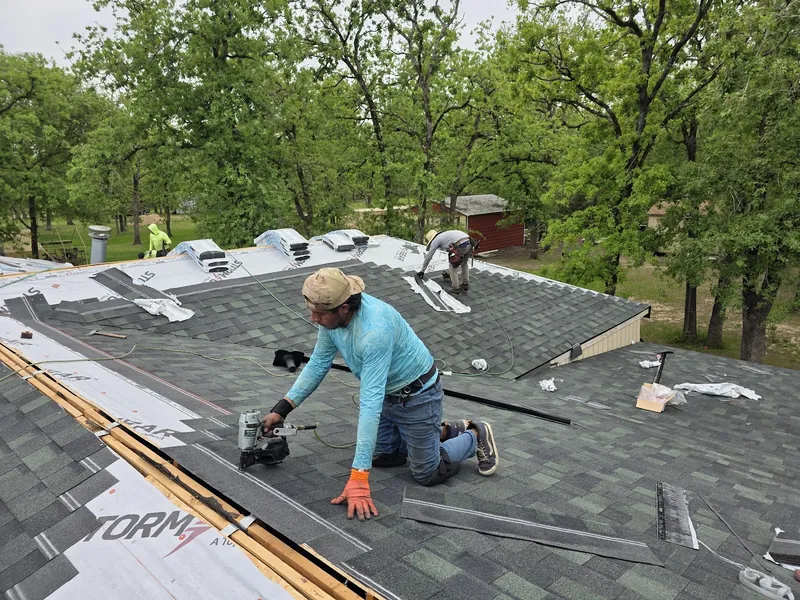
- Shingles, slope by slope, for hail strikes, granule loss, cracks, lifted or creased tabs and missing pieces.
- The ridge, which takes hail from both sides.
- Flashing, valleys, vents and pipe boots, where most leaks start.
- Metal on and around the roof for dents that show how big the stones were.
- Gutters for dents and a build-up of granules.
- Soft spots underfoot, and the area above any ceiling stain you have noticed inside.
Then we show you what we found, damage or no damage, and explain what each thing means. If the roof came through fine, we tell you that. Our guide to roof inspection cost compares a free inspection like ours with paid and windstorm inspections.
Does Hail Damage Leak?
Not always right away. IBHS tested shingles with hail damage and found a clear relationship between the size of the dent and how much water got through: small dents let in a negligible amount, large dents a lot, and tears let in large amounts of water.
The bigger problem is time. A shingle that lost its granules to hail bakes in the Texas sun faster than the ones around it, and a cracked or bruised spot gets worse with every storm after. That is why a roof with no leak today can still be worth inspecting: the damage shows up as a ceiling stain months later, when nobody connects it to the storm.
The Inspection and a Texas Insurance Claim
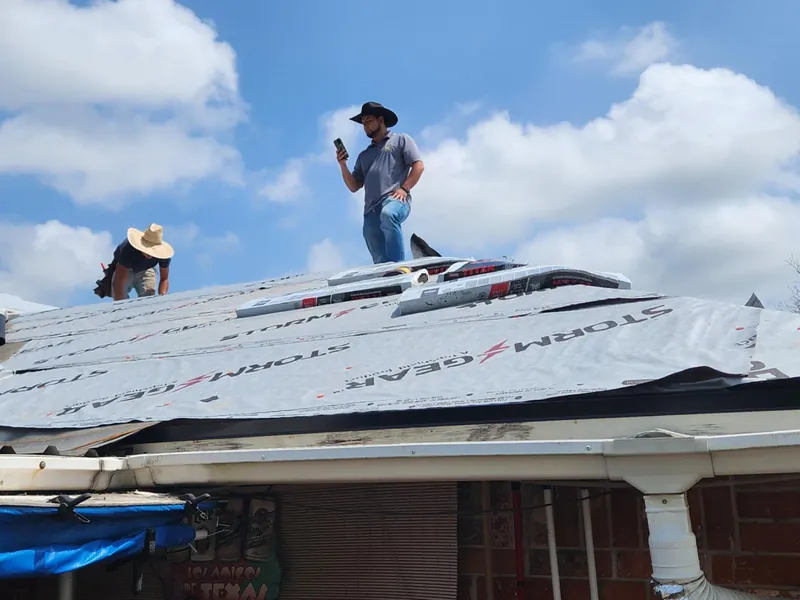
An inspection tells you whether there is damage. Whether to file a claim is your decision, and the claim is between you and your insurance company. If you do file, we can meet your insurance adjuster at the house to look at the roof; the adjuster works for your insurer and makes the assessment. Our insurance claim roofing page explains where we fit. A few Texas rules worth knowing first, all from the Texas Department of Insurance:
- Deadlines. Your insurer has 15 business days to acknowledge your claim, and 15 business days after it has what it needs to say whether it will pay. It can extend that by 45 days if it tells you why, and TDI can add 15 more after a weather catastrophe. Once it agrees to pay, it must pay within five business days.
- Photos first. TDI says it is generally OK to make temporary repairs, such as a tarp, but to take pictures before any work and not to make permanent repairs until you have talked to your insurer.
- Your deductible. Ask your agent whether your wind and hail deductible is different from the deductible for other damage, TDI advises on its roof replacement page.
- No deductible waivers. TDI says it’s illegal for contractors to waive your deductible or help you avoid paying it. An offer to “cover” it is a reason to find another contractor.
- Storm chasers. TDI warns that out-of-town scam artists may be the first at your door after a disaster, that it is against the law for out-of-town contractors to ask for a down payment before they start, and not to sign anything called an “estimate” or a “release” that is really a contract.
If the Roof Needs Replacing
If the damage is spread across the roof, we explain why replacement makes more sense than patching, and you get a free estimate. Two things to think about at that point:
- Impact-resistant shingles. TDI says roofing that passes the UL 2218 impact test may qualify for an insurance discount, and a Class 4 rating gets the highest premium credit. Each insurer sets its own discount, so ask yours before you choose.
- The rest of the house. Hail that hits the roof also hits the gutters and the siding on the storm side. Our guide to vinyl siding install cost covers the walls, and roof replacement cost in Houston covers the roof.
We inspect roofs for hail across greater Houston, from Houston to Spring, The Woodlands, Conroe, Pearland, Missouri City and Fresno. Hablamos español. Book a free hail damage inspection or use the form on this page.
Sources checked November 17, 2026: NOAA NSSL, Severe Weather 101: Hail; IBHS, Is It Hail Damage?; IBHS, Water Leakage Vulnerabilities for Shingles with Hail Damage; TDI: Getting your insurance claim paid (updated April 16, 2025), Home damaged FAQ (updated September 15, 2025), Replacing your roof (updated April 1, 2026), Can a contractor waive my deductible? and Contractor scams (both updated December 9, 2025), Roofing discounts (as of February 24, 2023).
Hail Inspection Questions
What does a hail damage roof inspection check?
The shingles on every slope for hail strikes, bruising, cracks and granule loss; the ridge caps; the flashing, valleys, vents and pipe boots; dents in the metal on and around the roof; and the gutters. A good inspector also separates hail marks from normal wear, which IBHS describes as granule loss along shingle edges or uniform wear across the roof.
How big does hail have to be to damage a roof?
NOAA's National Severe Storms Laboratory considers hail quarter size, 1 inch across, or larger to be severe. Smaller hail can still mark an older roof, so if you saw hail and the gutters or AC unit show dents, it is worth having the roof checked.
Can I tell if my roof has hail damage from the ground?
Not reliably, but you can find clues: dents or spatter marks on gutters, downspouts, flashing, the air conditioning unit or patio furniture, and granules washed out at the bottom of the downspouts. IBHS says that kind of collateral damage confirms a hail event happened. Do not climb onto the roof yourself.
Does hail damage always cause a leak?
No. IBHS testing found small dents let in a negligible amount of water while large dents and tears let in a lot. Damage that does not leak now can wear faster in the sun and leak in a later storm, which is why an inspection is worth it even when the ceiling is dry.
Can a roofer pay my insurance deductible in Texas?
No. The Texas Department of Insurance says it is illegal for contractors to waive your deductible or help you avoid paying it, and that contractors who do could be fined or go to jail. TDI asks homeowners to report those offers to the Texas Attorney General.
How much does a hail damage roof inspection cost?
Roofshire's roof inspection is free, with nothing to sign. Paid inspections from home inspectors and windstorm inspectors also exist; our roof inspection cost guide compares them.