
A Pearland roof rarely fails all at once. It starts with one tab that will not lie flat, a boot around a plumbing vent that has gone brittle, or a faint ring on an upstairs ceiling after a long Gulf downpour. Each of those is a repair, and handled early it stays a repair.
Roofshire Construction fixes roofs across Pearland, whether your address falls in Brazoria, Harris or Fort Bend County. The visit starts with a free inspection and ends with a free estimate that spells out exactly what we would fix. If the roof is past the point where patching pays, we say so plainly.
Our general roof repair page covers the full list of problems we handle. This page is about how those problems tend to show up on Pearland houses.
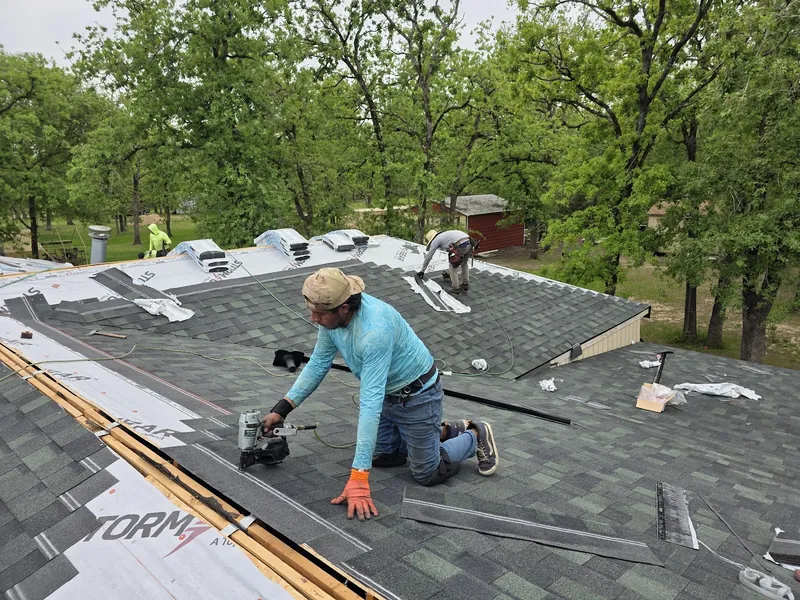
Finding Where the Water Actually Enters
On a two-story house, the stain you notice is often a full floor below the spot that is leaking. Water slips in at the roof, rides along a rafter or the top of the insulation, and drops wherever gravity takes it. A patch placed straight above the stain can miss by several feet.
So we work backward. We start in the attic when there is access, look for wet decking, darkened wood and daylight around nails, and then go up and match what we saw inside to what is on the roof. The fix goes where the water gets in, not where it lands. A slow leak can soak insulation and darken the decking for months before the drywall below ever shows it.
When a leak has already marked the ceiling, we can repair the drywall after the roof is sealed, so one company handles both sides of the problem.
Wind and Hail Repairs After a Pearland Storm
Pearland sits close enough to the coast that tropical weather arrives with force. A storm like Beryl does not need to strip a roof bare to leave work behind. It breaks the adhesive strip under a row of shingles, creases tabs back, and leaves a slope that looks normal from the sidewalk but will let the next storm in.
Hail leaves a different mark: bruised shingles, granules washed into the gutters, and dents in soft metal vents. When the damage is limited to one slope or one area, a section repair is often enough. When it covers every side, our storm damage roofing page explains how we approach the bigger job.
If you think a storm caused the damage, you decide whether to file a claim, and the claim is between you and your insurer. We can meet your adjuster at the house to look at the roof together. If the insurer approves the work, we do it to the approved scope.
Flashing, Pipe Boots and Valleys
Plenty of leaks have nothing to do with the shingles themselves. They start at the joints, where the roof meets something else.
Pipe boots
The rubber collar around each plumbing vent takes direct sun every day, and on many roofs it cracks well before the shingles around it are worn. Once it splits, rain runs straight down the pipe into the attic. Replacing a boot is a small job that stops a surprising number of leaks.
Wall and chimney flashing
Where a lower roof meets the wall of a second story, metal flashing tucks under the siding and laps over the shingles. If that piece was short, loose or only caulked in place, water gets behind it during wind-driven rain. We reset or replace it so it sheds water again.
Valleys
A valley carries the runoff from two slopes at once. On the cut-up rooflines common in newer subdivisions, valleys handle a lot of water, and worn or poorly woven shingles there are a frequent leak point.
Two-Story Subdivision Roofs Off Highway 288
Much of Pearland went up in a hurry along Highway 288, from Silverlake out to Shadow Creek Ranch. Builders on those streets often roofed houses within a few seasons of each other, so neighbors tend to see the same problems around the same time.
On these houses the upper slopes take the most sun and wind and get the least attention, because nobody can see them from the driveway. Ridge caps, the rakes along the gable ends, and the boots on the highest vents are where we look first. If you are part of an HOA, check its guidelines before any visible change; most repairs simply match what is already on the roof.
Repair It or Replace It?
A repair makes sense when the roof is sound overall and the problem is local. It stops making sense when the same area keeps leaking, when shingles everywhere are curling and shedding granules, or when the decking has gone soft from long exposure.
When we reach that point, we show you what we found and price a roof replacement alongside the repair, so you can compare the two. Either way, the decision is yours, and the crew cleans up the site when the work is done.
- Free inspection and estimate. You see the problem before you see a price.
- Upper slopes checked first. The parts of a two-story roof you cannot see are where repairs usually hide.
- Hablamos español. Let us know when you call if you prefer Spanish.
Call (832) 995-0575 or send us the details, and we will come down Highway 288 to take a look.